Start Your Construction Project Before Winter Arrives
- midplainsbuildings
- Aug 3
- 8 min read
A construction project rarely starts the day equipment rolls onto the property. Long before the first load of rock arrives or the first post goes in the ground, there are decisions to make, materials to order, schedules to line up, and ground conditions to think through.
That is why waiting until late fall, or putting the whole plan off until spring, can cost more time than many property owners expect.
At Mid-Plains Building Solutions, we encourage homeowners, farmers, and business owners to start planning now if they want a new home, farm shop, garage, commercial building, livestock facility, or major property improvement completed before Nebraska’s winter weather settles in. Even if the full project cannot be finished before the first hard freeze, getting it well underway can make a major difference.
Winter has a way of turning simple tasks into slow ones. Rain, snow, freezing temperatures, shorter daylight hours, and frozen ground can all affect excavation, concrete, site preparation, and scheduling. Starting now gives the project room to move forward without rushing the details that matter.

Good construction starts before the first day on site
Many people picture construction as the visible work. Equipment shows up. Dirt moves. Concrete gets poured. Framing begins. From the outside, that looks like the start of the job.
The real start happens earlier.
Before building begins, most projects need a series of practical steps, and each one affects the next. Rushing through them can lead to delays, rework, or decisions that become expensive later.
Common early steps include:
Site planning
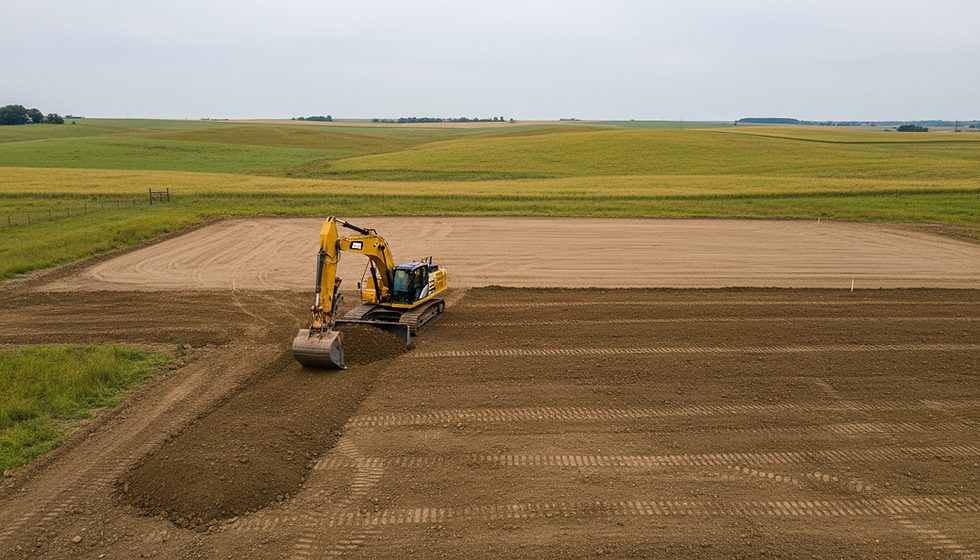
Excavation
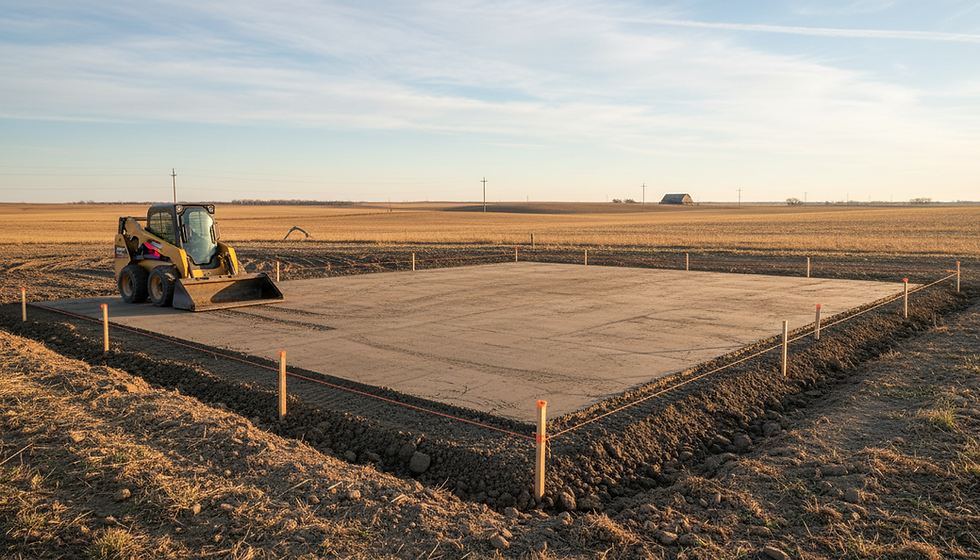
Building pad preparation
Drainage considerations
Concrete planning
Material ordering
Permit and approval review
Utility coordination
Subcontractor scheduling
Access planning for trucks and equipment
For example, a new farm shop may need enough space for wide equipment doors, proper drainage around the building pad, a concrete floor thick enough for heavy equipment, and safe access for trucks. A detached garage may need grading, driveway tie-ins, electrical planning, and local permit review. A commercial building may require even more coordination before any visible work begins.
Starting now gives those details time to come together.
It also gives the contractor time to listen. A good build starts with clear questions. How will the building be used in five years? What equipment needs to fit inside? Will the site need room for future expansion? Where does water go during heavy rain? What needs to be finished before cold weather limits certain work?
Those questions are easier to answer when there is still time to make smart choices.
Nebraska weather rewards early planning
Nebraska weather can change quickly, especially as fall moves toward winter. A dry week can turn into several days of rain. A warm stretch can give way to a hard freeze. Once the ground freezes, certain types of work become slower, more difficult, or less practical.
Excavation and site preparation are two of the biggest examples. When the ground is dry and workable, crews can shape a site more efficiently. They can cut, fill, compact, and prepare a pad with fewer interruptions. Wet or frozen ground can make that same work take longer.
Concrete work also depends on conditions. Cold temperatures affect how concrete is placed, protected, and cured. Contractors can use cold-weather practices when needed, but warmer conditions are often simpler and more predictable.
Starting before winter can help with:
More workable soil conditions
Better access for equipment and deliveries
Fewer weather interruptions
Easier concrete scheduling
Safer site conditions
More daylight for crews
None of this means every project must be fully complete before winter. Some projects are large enough that they will carry across seasons. The point is to get the right work started while conditions are still favorable.
A building pad, footings, concrete, shell work, or utility preparation completed before winter can put the entire project in a better position when work continues.

Waiting until spring often means joining a long line
Every spring, contractors hear from property owners who are ready to build. The weather improves, the ground starts to thaw, and projects that were only ideas during winter suddenly become urgent.
That spring rush can create a problem. Everyone wants to start at the same time.
Waiting until spring often means dealing with:
Longer scheduling times
Higher demand for contractors
Longer lead times on materials
Limited subcontractor availability
Delayed project starts
More pressure to make quick decisions
By the time a project is designed, priced, scheduled, and approved, the best part of the building season may already be slipping away.
Planning ahead helps avoid that bottleneck. It gives property owners a better chance to get on the schedule before demand peaks. It also allows more time to review options without making choices under pressure.
This is especially helpful for larger builds, custom work, and projects that involve several trades. A new home, commercial structure, farm shop, or large garage may involve excavation crews, concrete finishers, building crews, electricians, plumbers, overhead door installers, insulation crews, and more. Each trade has its own calendar.
Getting those pieces aligned takes time.
If you are searching for a General Contractor Eastern Nebraska property owners can work with before the spring rush, the best time to start the conversation is before the season changes.
Agricultural buildings need to be ready when the work starts
For farmers and acreage owners, timing is not just a convenience. It affects the whole year.
Spring brings planting, equipment prep, livestock work, repairs, deliveries, and long days. A building that is ready before spring can make that season smoother. A building that is still waiting to start can create problems when time is already limited.
Agricultural projects that benefit from early planning include:
Machine sheds
Equipment storage buildings
Pole barns
Livestock facilities
Hay storage
Feed storage
Farm shops
Concrete aprons and approaches
Driveways and equipment access areas
A machine shed completed before winter can protect planters, tractors, combines, attachments, and trucks from months of exposure. A farm shop finished before spring gives space for maintenance and repairs before fieldwork begins. A livestock facility ready ahead of cold weather can improve daily chores and help protect animals from harsh conditions.
Concrete improvements matter too. A well-planned approach, apron, or pad can make it easier to move equipment, load supplies, and reduce mud around high-traffic areas. Those improvements become much harder to complete once freeze-thaw cycles begin.
The value of an agricultural building often shows up during the busiest week of the year, when equipment, space, weather, and time all matter at once.
Starting now allows for better planning around harvest, livestock needs, and the farm calendar. It also gives the construction team time to understand how the building must function in real daily use.

The right schedule protects the quality of the build
Good scheduling is not just about finishing sooner. It protects workmanship.
When a project starts too late, every delay feels bigger. One rainy week can push concrete. A material delay can affect framing. A subcontractor schedule can shift. Cold weather can limit the workday. If a project is already tight, each setback adds pressure.
A better schedule gives each phase enough room.
Site planning can happen before crews arrive. Excavation can be scheduled when the ground is more workable. Materials can be ordered with lead times in mind. Permits and approvals can move forward without holding up crews. Subcontractors can be brought in at the right point in the project, not after the schedule is already strained.
This helps reduce rushed choices, such as settling for a layout that does not fit the property well or choosing materials only because they are available fastest. It also helps the contractor communicate more clearly about what can happen before winter and what may need to wait.
For Construction projects Eastern Nebraska weather, soil, and seasonal demand all play a role in the final timeline. A thoughtful schedule accounts for those realities instead of pretending they do not exist.
That matters for all types of builds:
Project type | Why early planning helps |
New homes | More time for site layout, utilities, foundation work, and material selection |
Farm shops | Better scheduling around harvest, equipment storage, and concrete needs |
Garages | Time to plan driveway access, drainage, doors, and electrical options |
Commercial buildings | More room for approvals, trade coordination, and phased work |
Property improvements | Easier timing for grading, concrete, drainage, and access upgrades |
The best schedules leave room for real life. Weather changes. Materials can take longer than expected. A site may need extra preparation. Planning early gives the project a cushion.
Starting now helps control decisions and expectations
One of the biggest benefits of starting early is the chance to make decisions calmly.
Construction includes many choices, and some of them affect the budget, schedule, and long-term usefulness of the building. Waiting too long can force decisions into a compressed window.
Early planning helps clarify:
Building size and layout
Door placement and equipment access
Site drainage
Interior use and storage needs
Concrete thickness and finish
Insulation and ventilation
Electrical and lighting needs
Future expansion plans
Budget range
Construction timeline
For a garage, that might mean deciding whether it needs extra depth for a pickup, a workbench, or storage along the walls. For a farm shop, it might mean planning door height and interior clearance around the largest piece of equipment. For a commercial building, it might mean thinking through customer access, delivery routes, parking, utilities, and future growth.
These details shape the finished project.
Early planning also helps set realistic expectations. A contractor can explain which parts of the project are most sensitive to weather, which materials may need extra time, and which steps should happen first. That makes the process less stressful once work begins.
A clear plan does not remove every surprise, but it reduces avoidable ones.

What to do now if you want to build before winter
If a project has been on your mind, now is the time to move it from idea to plan. The first step does not have to be complicated. It simply needs to start the conversation.
A practical first move is to define the basics:
What do you want to build?
Where will it sit on the property?
How will it be used?
What size are you considering?
What needs to be completed before winter?
Are there drainage, access, or concrete needs?
Are permits or approvals likely?
What budget range makes sense?
From there, a contractor can help look at the site, discuss options, and identify the steps needed before construction begins.
Some projects may still have time to finish before winter. Others may be better suited for phased work, such as preparing the site, completing concrete, or getting the structure started before cold weather slows progress. Either outcome is better than waiting until spring and starting from zero.
Mid-Plains Building Solutions works with property owners who want buildings that fit their land, their schedule, and their daily needs. Whether the goal is a home, farm building, garage, commercial structure, or major improvement, early planning creates a better path forward.
Winter will arrive whether the project is ready or not. Starting now gives the work a stronger chance to move ahead while the weather, the schedule, and the building season are still on your side.

Comments