Why Proper Excavation and Site Preparation Matter for Construction Success
- midplainsbuildings
- Jul 31
- 7 min read
Published by Mid-Plains Building Solutions
A building is only as reliable as the ground beneath it. Long before concrete trucks arrive, framing begins, or steel goes up, the site itself has to be prepared to carry the weight, shed water, and support the structure for years to come.
That is why excavation and site preparation are such important parts of any construction project. Whether the project is a new home, farm shop, machine shed, commercial building, or industrial facility, the early work done on the land can shape everything that follows.
At Mid-Plains Building Solutions, we provide professional excavation and site development services throughout Eastern Nebraska, helping property owners prepare safe, stable, and buildable sites for projects of many sizes.

Site preparation involves far more than moving dirt
It is easy to look at excavation as simple dirt work. A machine digs, fills, levels, and moves on.
In reality, proper site preparation requires planning, experience, and the right equipment. The goal is not just to make a site look flat. The goal is to create ground conditions that support the building, manage water, reduce erosion, and limit future problems.
A well-prepared site helps provide:
A stable base for footings, slabs, and building pads
Proper drainage away from the structure
Reduced erosion around the project area
Better long-term structural performance
Fewer costly repairs caused by settlement or water damage
Every site has its own conditions. Soil type, slope, existing vegetation, low spots, drainage patterns, and access points all affect how the site should be prepared. A rural acreage with soft low ground needs a different approach than a compact commercial lot. A farm shop that will handle heavy equipment needs a different building pad than a small outbuilding.
Good excavation work accounts for these details early, before they become expensive problems.
The ground must be ready to support the structure
The weight of a building transfers into the soil. If that soil is unstable, poorly compacted, or uneven, the structure can shift over time.
Foundation settlement is one of the most common results of poor site preparation. It may begin subtly, with small cracks in concrete or minor changes in doors and windows. Over time, settlement can lead to larger cracks, uneven floors, water intrusion, and costly structural repairs.
Proper building pad preparation helps reduce that risk.
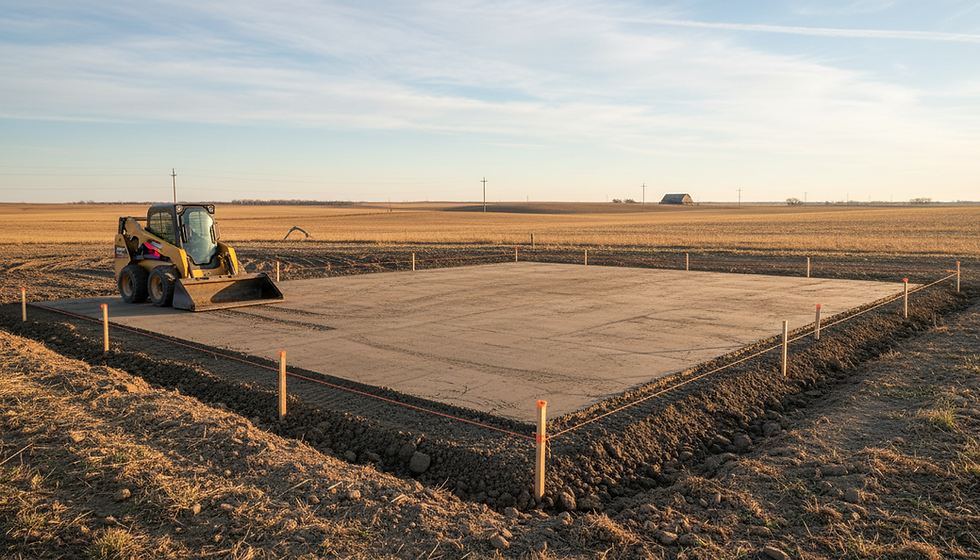
For homes, shops, pole barns, and commercial buildings, the pad must be established with the right elevation, slope, compaction, and material. This may include removing unsuitable soil, bringing in better fill, compacting in controlled layers, and shaping the pad to match the needs of the structure.
The goal is simple: the building should rest on ground that is firm, consistent, and prepared for the load it will carry.
Skipping this step or rushing through it can create weak spots under slabs, footings, and drive areas. Once the building is complete, those weak spots are much harder and more expensive to fix.
Drainage is one of the biggest keys to long-term performance
Water is one of the most damaging forces on a building site. If it collects near the foundation, flows toward the structure, or erodes soil around the building, it can create serious problems.
Site grading is the process of shaping the land so water moves where it should. In most cases, that means directing water away from buildings, drives, and high-use areas.
Good grading supports:
Dry foundations
Usable driveways and access points
Better erosion control
Longer-lasting slabs and building pads
Safer movement around the property after rain or snowmelt
In Eastern Nebraska, properties often deal with seasonal weather changes, heavy rains, snow, thaw cycles, and agricultural runoff concerns. These conditions make drainage planning especially important.

Poor drainage can lead to standing water near the building. That water can soften soil, increase pressure around foundations, and create muddy, unstable access points. In winter, water that freezes and thaws can worsen movement in the soil.
A site that drains properly protects the investment long after construction is complete.
Land clearing sets the stage for safe and efficient work
Before grading or excavation can begin, the site often needs to be cleared. Land clearing may include removing trees, brush, debris, old fencing, abandoned materials, or unwanted structures.
This step does more than create open space. It gives crews safe access to the work area and reveals the true condition of the land. Once brush and debris are removed, it becomes easier to identify slopes, low spots, soft areas, and obstacles that could affect the project.
Professional land clearing also helps protect the parts of the property that should remain undisturbed. That may include mature trees, drainage areas, existing lanes, property boundaries, or nearby structures.
When clearing is handled carefully, the rest of the project can move forward with fewer surprises.
Excavation shapes the site for foundations, utilities, and access
Excavation is a broad part of site development. It may include digging for foundations, shaping driveways, trenching for utilities, creating drainage features, or preparing areas for ponds and other improvements.
For a construction project, excavation often supports several critical needs.
Foundation excavation must match the building plan
Foundation excavation needs to be accurate. Depth, width, elevation, and soil conditions all matter. If the excavation is not right, the foundation work becomes more difficult and less reliable.
This is especially important for structures that require footings, frost-depth considerations, basement excavation, or engineered slab systems. Proper excavation helps concrete crews, builders, and inspectors work from a clean and prepared site.
Utility excavation must be planned with care
Many projects need trenching for water, sewer, electrical, gas, or drainage lines. These trenches need proper depth, slope, bedding, and backfill practices.
Poor utility excavation can create future issues, including settling trenches, damaged lines, or drainage problems. A well-planned approach keeps utilities accessible, protected, and properly placed in relation to the building.
Access routes need strong preparation
Driveways, lanes, and equipment access areas often take heavy use during construction. They may also serve the property for decades after the building is complete.
Excavation and grading for access routes should account for traffic flow, drainage, base material, and long-term maintenance. This is especially true for farm shops, commercial sites, and industrial properties where trucks and heavy equipment will use the area often.
Demolition needs to leave the property ready for what comes next
Some projects begin with removal rather than construction. An old shed, house, barn, concrete pad, or small commercial structure may need to come down before new work can begin.
Safe demolition requires more than knocking down a structure. The site must be cleared, debris must be handled properly, and the area must be prepared for future development.
Mid-Plains Building Solutions provides demolition services for small structures and full site preparation needs. After demolition, the next steps may include removing unsuitable material, backfilling, grading, compacting, and shaping the site for the new project.

A clean demolition process helps avoid buried debris, uneven settling, and drainage problems that could affect the new build.
Cutting corners early often costs more later
Excavation and site preparation are sometimes viewed as places to save money. That can be a costly mistake.
Poor dirt work can lead to problems that show up months or years later. Common issues include:
Cracked slabs
Uneven settlement
Water pooling around buildings
Washed-out driveways
Soft or muddy work areas
Erosion near foundations
Utility trench settlement
Premature repairs to concrete or access roads
By the time these issues become visible, the building may already be finished. That means repairs can involve tearing out concrete, correcting drainage after landscaping is complete, or bringing equipment back to a tight site with limited access.
Good site preparation prevents many of these problems before they start.
It also helps other trades do their work better. Concrete crews need stable forms and proper elevations. Builders need reliable access and a level working area. Utility crews need safe, accurate trenching. The entire project benefits when the site is prepared correctly from the beginning.
Professional equipment and experience make a real difference
Quality excavation depends on more than owning heavy equipment. Operators need to understand soil behavior, drainage, grades, compaction, access, safety, and construction sequencing.
A skilled excavation team looks at the whole site, not just the immediate task. For example, cutting a pad too low might seem fine during dry weather, but it could create water problems later. Leaving organic material under a fill area may not show up right away, but it can decay and settle over time. Moving water to one side of the property may solve one issue but create another if the outlet is not planned correctly.
Professional preparation involves asking practical questions before work begins:
Where will water go during heavy rain?
Is the soil firm enough to support the planned structure?
Does unsuitable material need to be removed?
Will the building pad be high enough?
How will equipment and vehicles access the site?
Are utilities, ponds, drives, or drainage improvements part of the plan?
What areas should be protected during construction?
These questions help create a site that works during construction and after the building is in use.
Mid-Plains Building Solutions prepares sites for projects of every size
Mid-Plains Building Solutions offers complete excavation and site development services for residential, agricultural, commercial, and industrial projects.
Our services include:
Land clearing
We remove trees, brush, debris, and unwanted materials to prepare the property for development.
Site grading
We shape the land to create a level, stable building area and direct water away from structures.
Building pad preparation
We prepare pads for homes, machine sheds, pole barns, farm shops, commercial buildings, and other structures.
Excavation
We perform excavation for foundations, utilities, drainage systems, ponds, driveways, and site improvements.
Demolition
We remove existing structures and prepare the site for the next phase of development.
This work is practical, visible, and essential. When done correctly, it gives the project a stronger start and helps reduce the chance of costly problems later.

A successful build starts with the site
The best time to solve soil, drainage, access, and grading problems is before construction begins. Once concrete is poured and the structure is in place, every correction becomes harder.
Proper excavation and site preparation create the conditions a building needs to perform well. The site supports the foundation, controls water, reduces erosion, and gives crews a safer, more efficient place to work.
For property owners planning a home, farm shop, commercial building, or industrial facility, the first major decision is not just what to build. It is how to prepare the ground that will support it.
Mid-Plains Building Solutions helps start that process the right way, with professional excavation and site development services built around long-term performance.


Comments